
Atlanta, GA · Garbage disposal repair and replacement
Sink Disposal Repair in Atlanta, GA: Jammed, Humming, Leaking or Ready for Replacement
A disposal that hums and will not spin, one that leaks into the cabinet or one that smells even after it is run all point to a particular part. The first decision is whether you have a jam, a failed motor or a leak, since each leads to a different fix. Our dispatch line routes the call to a plumber working your area of Atlanta.
Say whether it hums, is silent, or leaks. The dispatcher sends the call to a plumber who serves Atlanta.
Call now- Your ZIP code and the disposal's brand if visible.
- Whether it hums, clicks or does nothing.
- Where water shows: top, side or bottom.
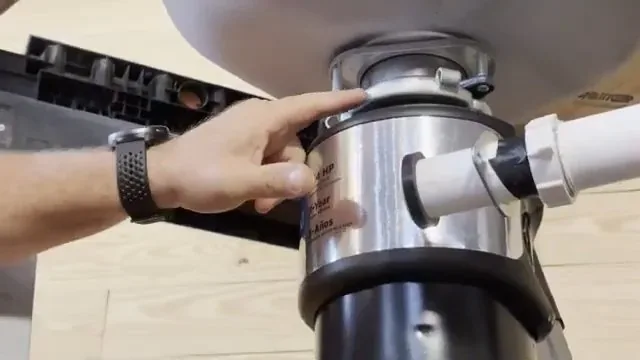
Jam, motor or leak: which one is it?
A disposal has three common failure modes, and each shows a different symptom.
| Symptom | Likely cause | What helps |
|---|---|---|
| Hums but the blades do not turn | A jam in the grinding chamber | Manual turn with a hex key, then reset |
| Silent, no hum | Tripped reset button, off switch or failed motor | Press the reset, check the switch and breaker |
| Clicks or runs slowly | A worn motor or a partial jam | Clear the jam; replace if it persists |
| Water under the sink | A leaking seal at the sink flange, a cracked housing or a loose drain connection | Find where the water first appears |
| Bad smell | Food residue in the chamber or splash guard | Clean the chamber and the guard |
If the disposal never turns on and the reset button does not pop back in, the motor is likely done and replacement is the next step.
Safe reset steps: never reach into a disposal
Safety: Never put a hand or utensil into a disposal. Switch the power off at the wall switch and at the breaker, or unplug it, before you do anything.
- Turn off the power at the switch, and at the breaker if the unit is hardwired.
- Look into the chamber with a flashlight and remove debris with tongs, not fingers.
- Insert a hex key into the socket at the bottom and turn it back and forth to loosen the blades.
- Press the red reset button on the underside of the unit.
- Restore the power and run cold water for a few seconds before switching it on.
If it jams again within a day or two, something other than a simple obstruction is wrong, and a plumber should look at it.
Garbage disposal repair: what can be fixed and what cannot
Leaks at the drain connection or the mounting flange can often be tightened or resealed. A leak from the housing itself, or from a seal around the motor shaft, cannot be repaired, and the disposal is replaced.
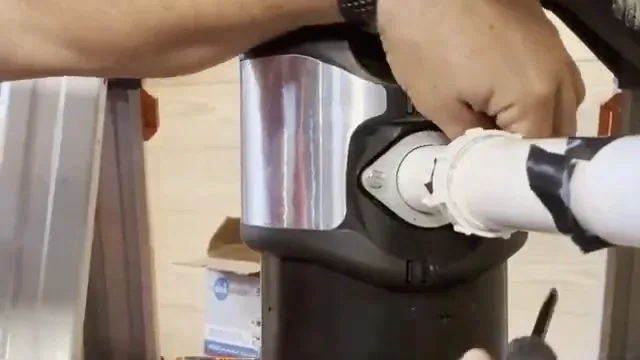
Jams, a tripped reset and a failed switch are small repairs. A motor that has seized, burned out or lost its seals is not worth repairing in most units, since a new disposal costs about what the repair would. Ask the plumber to say which it is.
A repair visit starts with confirming the power and the reset, then looking at the connections and the mounting. The plumber may run water to look for leaks under load. Ask what failed and which parts were replaced, and keep that note with the unit's age so a later call has history.
Garbage disposal replacement: choosing and installing a new unit
Replacing a disposal means disconnecting the drain, removing the old unit from the mounting ring, installing the new one and reconnecting the drain and, if present, the dishwasher inlet. Hardwired units also need the electrical connection checked.
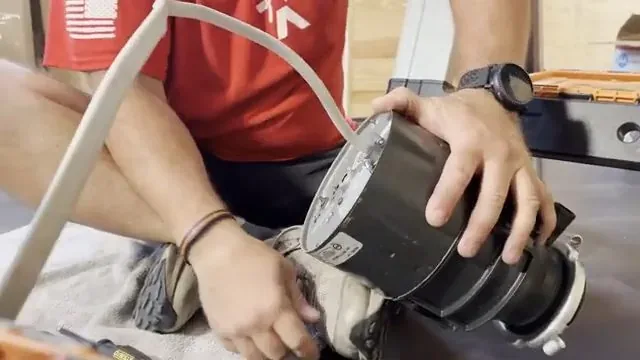
- Horsepower: larger motors handle tougher loads and run quieter, up to a point.
- Feed type: continuous feed runs while a switch is on; batch feed runs when the stopper is in place.
- Mounting: some replacements fit the existing mount; some need a new ring.
- Dishwasher connection: the knockout plug must be removed so the dishwasher can drain.
Plan for a short visit when the unit is a direct replacement, and a longer one when the mount, the electrical connection or the drain plumbing has to change. Bring the old unit's model number if you can read it, because it tells the plumber what mount and hardware it uses. Ask whether the old unit will be hauled away, and whether any fittings that are corroded or worn will be replaced at the same time.
Ask the plumber to confirm that the new unit fits under your sink and that the dishwasher drain loop is set correctly.
Leaking disposal: where the water comes from
Water under the sink can come from the sink flange on top, the drain pipe on the side, the dishwasher hose or the housing at the bottom. Dry the area, run water into the sink with the disposal off, and watch where drops return.
A dishwasher connection that leaks, or a dishwasher that drains slowly into the disposal, is a related problem. The dishwasher drain hose should loop up high under the counter or connect through an air gap, so that sink water cannot flow back into the machine. A clogged or kinked hose, or a knockout plug that was never removed from a new disposal, causes slow draining. A disposal that backs up into the second sink bowl points to a clog in the shared drain.
A dishwasher that fills the sink or leaks near the disposal may have a blocked drain hose or a plugged air gap. A clog in the pipe past the disposal is a drain issue, covered by the drain cleaning page.
What causes repeat clogs after a repair
Grease, fibrous food such as celery or corn husks, and starchy waste like pasta and rice are the usual culprits. Grease cools in the drain and catches other waste, so a disposal does not make it safe to wash grease down the sink.
- Run cold water before, during and for a few seconds after use.
- Cut large scraps and feed them slowly.
- Skip coffee grounds, eggshells in quantity, bones, pits and fibrous stalks.
- Keep grease and oil out of the sink altogether.
For installs in a remodel or a new fixture connection, see faucet and fixture work.
If a disposal keeps jamming after correct use, a worn motor or a bent shredder plate may be the cause, and a camera or cable check of the drain line past the disposal can show whether the drain is partly blocked. Repeated jams are a reason to stop repairing and replace the unit.
Questions about garbage disposals in Atlanta
Why is my garbage disposal humming but not spinning?
Something is jamming the blades. Switch the power off, loosen the blades with a hex key from underneath, and press the reset button.
Do I call a plumber for a disposal repair?
A jam or tripped reset you can handle. A leaking housing, a seized motor or a replacement is a plumber's job.
Is a leaking disposal fixable?
A loose drain connection or flange seal can be fixed. A leak from the housing means replacement.
How do I stop my disposal from smelling?
Clean the chamber and splash guard, run cold water after use and avoid grease and fibrous waste.
Can a disposal clog the sink drain?
It can. Waste that gets past the disposal can still catch in the drain line. A cable or camera finds it.
Related sink pages
Fixtures
Faucets, supply valves and toilets are on the fixture repair page.
Clogs
Clearing a clogged drain covers what happens past the disposal.
Leaks
If water keeps appearing, a leak check may show a source elsewhere.
Disposal jammed or leaking in Atlanta? Call the dispatch line to reach a plumber serving your area.
CALL (770) 588-0011