
Atlanta, GA · Water line repair and replacement
Water Line Plumber in Atlanta, GA: Who Repairs What Between the Street and Your House
A wet patch in the yard, low pressure through the whole house or a meter that runs with everything off can all point to the water line that runs from the meter to your house. That line has an owner, and in Atlanta the owner changes at the meter. Call our dispatch line and a plumber who serves Atlanta takes it from there; this page explains which side is yours and what repair or replacement looks like.
Say whether the leak is before or after the meter. The dispatcher sends your call to a plumber who serves Atlanta.
Call now- Your ZIP code and who sends your water bill.
- Where you see water or low pressure.
- Whether the meter moves with the main closed.
Meter to house, or main to meter: who owns the water line?
The water line has two sections. The main runs under the street. A smaller service line branches from it, passes through the meter box and continues to the house. The meter is where responsibility changes.
Where the City's line ends and yours begins
The homeowner repairs the pipe from the meter to the house, and the City repairs the pipe from the main to the meter. That is how the Department of Watershed Management describes the split.
City-side leaks are reported to ATL311, 404-546-0311. House-side leaks are a plumber call.
This applies to City of Atlanta water accounts; a different utility may place the boundary elsewhere, so ask whoever sends your bill. The meter check for finding a leak at the meter shows which side the leak is on.
Service line leak: signs and first checks
Water from a service line leak goes into the ground, so it can run for weeks before anyone sees it.
- A soft, wet or unusually green patch in the yard on the path between the meter and the house.
- A meter that keeps moving after the main shutoff inside the house is closed.
- Low water pressure through the whole house.
- A water bill that rose with no change in use.
- A sound of running water near the meter or at the point where the line enters the house.
Yard service line leaks have a few more tells: a swampy spot, bubbling where water comes up through soil or a concrete slab near the line, or leakage around the base of a pipe where it enters the house or a meter box. Water seeping up in one place, even in dry weather, usually means a line below it is leaking.
First checks are safe and quick: close the main shutoff at the house and read the meter; if it stops moving, the leak is inside; if it keeps moving, the leak is outside or at the valve. Write down both readings.
Water line repair: what a plumber does on the house side
A repair starts with locating the line. Marked utility locations come first, then the plumber digs to the leak, cuts out the damaged section and joins new pipe. A short leak in otherwise sound pipe is a repair. Several leaks along the same run, or pipe that is corroded, point to replacement.
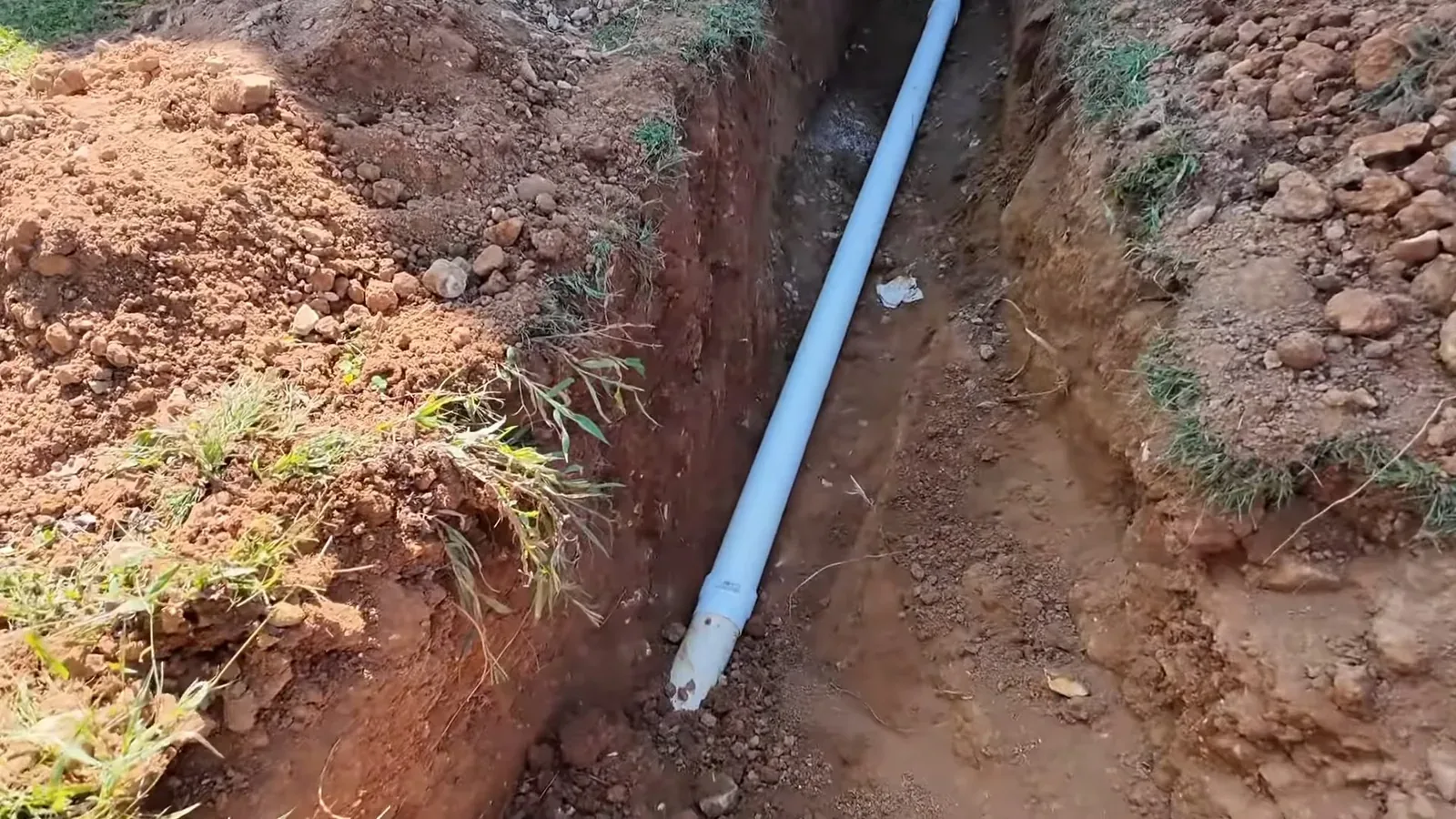
The plumber should tell you what the pipe is made of, how long the failed section is and whether the rest of the line looks sound. Ask for photos of the opened trench.
| Situation | Repair | Replace |
|---|---|---|
| One leak, pipe otherwise sound | Fits | Not usually needed |
| Several leaks on the same run | Likely to repeat | Fits |
| Old or corroded pipe | Temporary at best | Fits |
| Pressure problems along the line | Check for a leak or a closed valve first | Fits if the pipe is restricted or worn |
| Line passes under a driveway or tree roots | Depends on access | Often combined with rerouting |
Water line replacement: pipe material and the private side
Replacement means a new line from the meter connection to the house. Pipe material is the main decision. Homes in Atlanta were built across many decades, so a service line can be anything from older metal to newer plastic.
The City reports no lead in its own service lines and says private plumbing materials are outside its control. That leaves the private side as your question: ask the plumber to identify the existing pipe before work starts, and to name the replacement material and its rating.
At City of Atlanta addresses, replacement piping in a one or two family home is permit work handled by the Office of Buildings. Ask who applies for it. Other cities differ.
A new water line installation, for example to a rebuilt house or a detached building, follows the same steps: locate utilities, trench, lay pipe, pressure test and backfill.
Related whole-house work, such as replacing all of the supply pipe inside the house, is covered on the repiping page.
Pressure regulator, shutoff valve and meter: the parts near the meter
Several parts sit between the meter and the house, and a failure in one of them can look like a water line problem.
- The main shutoff valve: if it does not close fully, it is the first thing to replace before other work.
- The pressure regulator, where one is installed: a failing one can cause high or low pressure.
- The meter: a leak at the meter connection on the City's side is the City's; a leak on the house side of the connection is yours.
- Isolation valves: a leaking valve is often a repair rather than a line replacement.
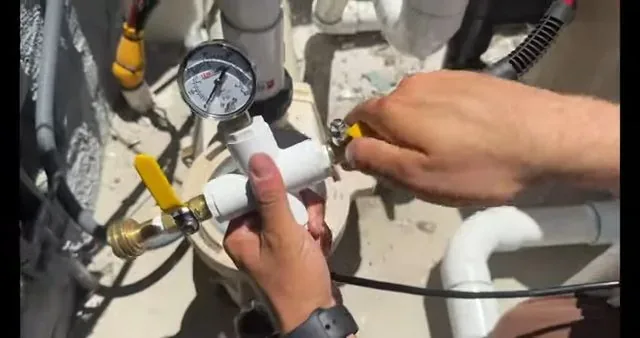
Low pressure through the whole house is not always a leak. A partly closed valve, a clogged regulator screen or a restricted line can do the same. A pressure test with a gauge on an outdoor spigot shows the number, and a plumber can compare it with what the house should see.
Georgia 811 and trench safety
Before a trench is opened, the plumber requests utility locates through Georgia 811, which is required ahead of mechanized digging. Build about three business days into the schedule while the other utilities mark their lines.
Once the lines are marked, the plumber digs by hand near the marks, keeps the trench walls supported where it is deep, and restores the surface afterward. Request the 811 ticket number for your file; it proves the locate request was made, and when.
Safety: Do not dig near the water line yourself. Gas, electric and communication lines can share the same yard, and a trench can collapse.
If the leak is at the meter or in the street, stay out of the water and report it to the City.
Questions about water line repair in Atlanta
Who repairs a water line leak in Atlanta?
It depends on which side of the meter the leak is on. After the meter is the homeowner's; before it is the City's, reported through ATL311.
How do I know if my water line is leaking?
Look for a wet patch in the yard, a meter that moves with the main closed, low pressure through the whole house and a rising bill are the main signs.
How long does a water line repair take?
It depends on how deep and how long the section is, what is above it and how quickly utilities are marked. The plumber gives an estimate on site; none is given here.
Is my old water line lead?
Per the City, its own lines contain no lead. The pipe on the private side is a separate question, so ask the plumber to name the material.
Do I need a permit to replace a water line?
Replacement piping at City of Atlanta addresses generally goes through the Office of Buildings. Ask the plumber who applies.
Where the water line meets other work
Finding the leak
The meter check and the way a hidden leak is located are explained under locating a hidden leak.
Whole-house pipe
For all of the supply pipe inside the house, see repiping and pipe repair.
Under the floor
Lines under a floor are covered on the lines under a floor.
Water line leak or no pressure in Atlanta? Call the dispatch line to reach a plumber serving your area.
CALL (770) 588-0011