
Atlanta, GA · Sewer line repair and replacement
Emergency Sewer Line Repair in Atlanta, GA: Mainline Clogs, Backups and Camera Inspection
Several drains gurgling at once, sewage in a tub or floor drain, or a toilet that bubbles when the washer drains points to the main line. A mainline clog or a damaged sewer pipe is the kind of problem that gets worse with every flush. Our dispatch line takes backup calls 24/7 and passes them to a plumber who serves Atlanta; this page explains what the plumber should check and who owns what.
Say which drains are backing up and whether sewage is coming up. The dispatcher sends your call to a plumber who serves Atlanta.
Call now- Your ZIP code and the lowest drain that is backing up.
- Whether you have stopped using water.
- Where the cleanout is, if you know.
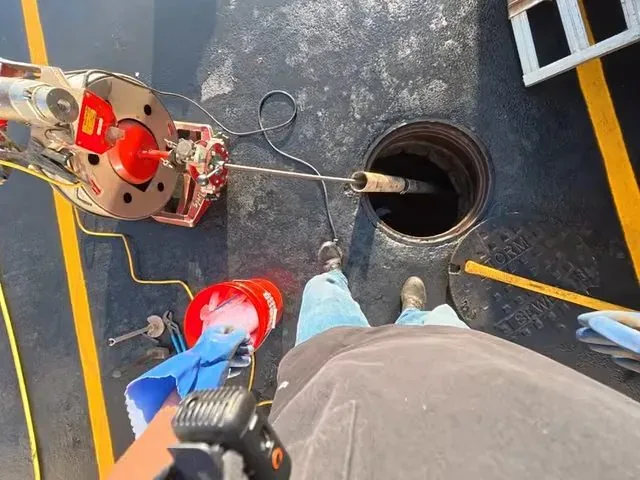
Sewage backup in Atlanta: what to do first and who to call
A backup is a sign that wastewater cannot leave the house. Every fixture you use adds to it, so the first steps are about stopping the flow.
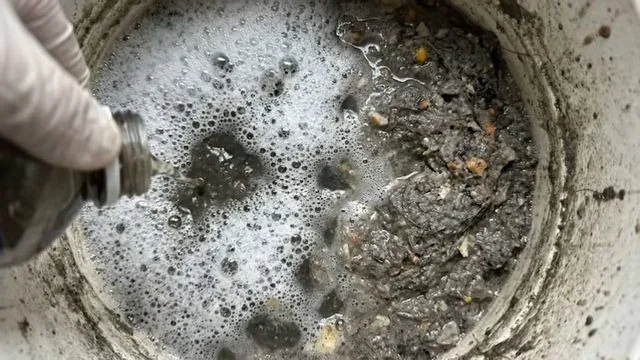
- Stop using water: no flushing, no showers, no washing machine or dishwasher.
- Keep people and pets away from any standing water. Sewage carries bacteria.
- Do not mix drain chemicals or run them into the line. They do not clear a main line and they are a hazard to the plumber.
- Call the dispatch line and say which drains back up and which is lowest.
- If you suspect the blockage is in the public sewer, report it to the City: the Department of Watershed Management directs customers to customer care at 404-546-0311 (ATL311).
Safety: If sewage reaches carpet or drywall, leave the cleanup to a restoration crew and wear gloves and boots if you must enter the area. See sewage backup cleanup under water damage restoration for extraction and drying.
Sewer cleaning and rooter service: clearing a mainline clog
A clogged sewer line shows up as a mainline clog: a blockage in the pipe that carries wastewater from the house to the sewer. Grease, wipes, paper and roots are the usual causes. A rooter machine with a cutting head, or hydro jetting, clears most of them.
Clearing the line restores flow. It does not tell you why the clog formed. A line that clogs again in a few months usually has roots, a sagging section or a cracked pipe. The camera inspection below is what separates a one-off clog from a pipe that needs work.
Callers describe the same things: toilets that bubble, a lower drain that backs up first, a smell near a cleanout. If this describes your house, the how branch clogs differ explains how branch clogs differ from a main line problem.
Sewer camera inspection: what the plumber should show you
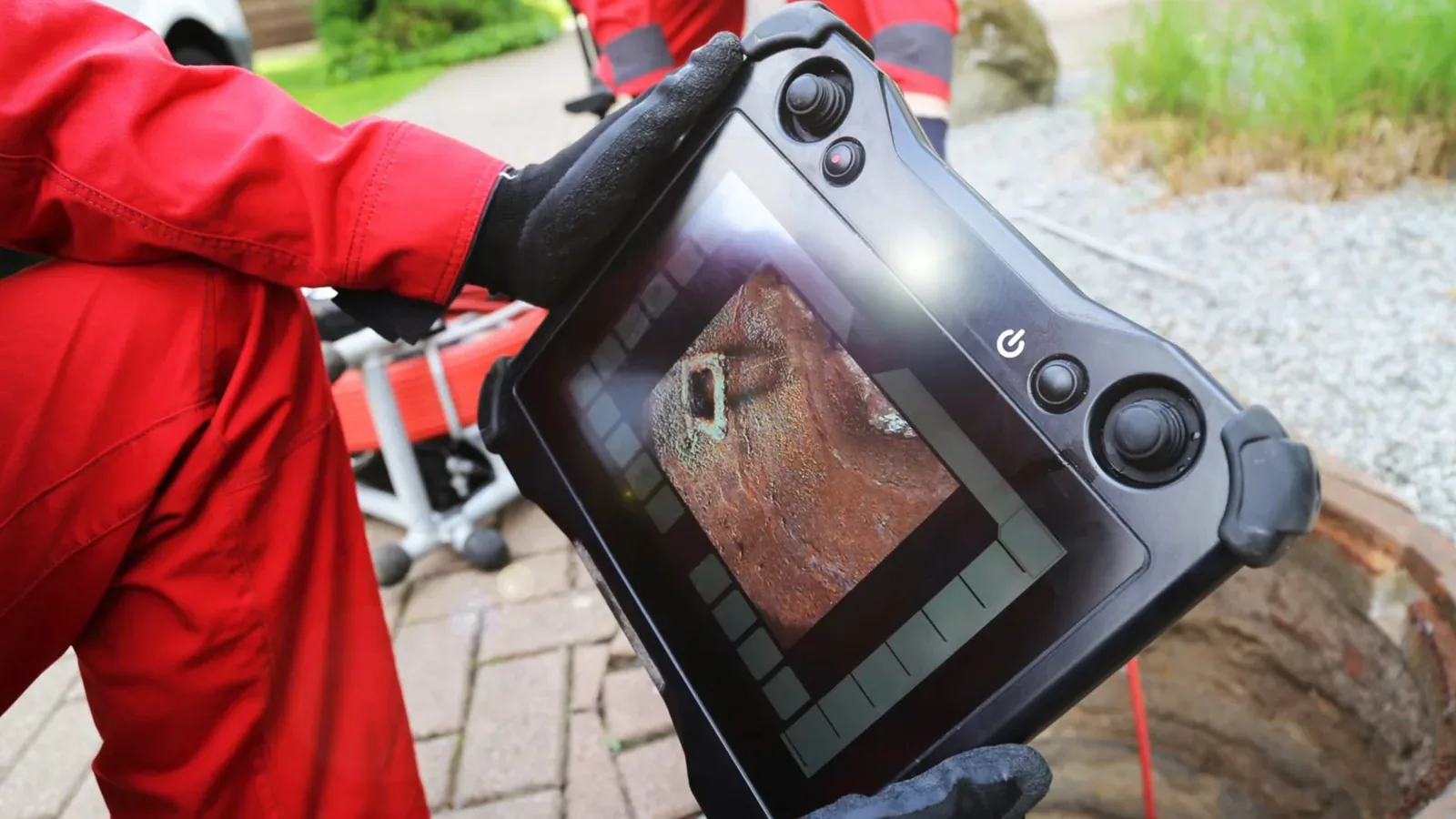
A sewer scope, also called a CCTV sewer inspection, is a waterproof camera on a flexible cable that is fed into the line through a cleanout. The plumber watches a monitor and can record the pass. It is how a repair decision gets made without digging.
| What the camera shows | What it usually means | Next step |
|---|---|---|
| Grease or debris coating the pipe wall | A buildup problem, not damage | Jetting and a maintenance plan |
| Roots entering at joints | A joint is open or cracked | Root cutting, then a lining or repair decision |
| A sagging section that holds water | The pipe has shifted | Spot repair or replacement of that section |
| Cracks, breaks or collapsed pipe | The pipe has failed | Repair or replacement |
| Offset joints, misaligned pipe | Sections have separated or settled | Repair or lining, depending on length |
- Ask for the video, or at least still images with the distance from the cleanout.
- Ask the plumber to mark the surface where the problem sits.
- Ask whether the whole line to the street or tap was inspected, or only part.
Who owns which part of the sewer line
This is the question that decides who pays. The City of Atlanta's page for reporting problems directs sewer calls to ATL311 and does not say who owns the sewer lateral, the pipe from your house to the public main. No City or county source that names the owner was found, so this page does not state it.
The right way to find out is to ask the utility that serves your address. If your bill comes from the City of Atlanta, ask the City. If another city or county utility bills you, ask that utility. Ask where the owner's responsibility ends, usually at the property line or at a connection to the main, and whether the City or county handles repairs inside the right-of-way.
Many house sales also trigger a sewer inspection. A camera check before closing shows the condition of the lateral and gives the buyer and seller something to negotiate with. Keep the written findings.
Sewer repair, trenchless lining or replacement: how the choice is made
Pipe age matters here. Older homes may have cast iron, clay or Orangeburg sewer pipe, each with its own weak points, while newer ones are more likely to have plastic. Ask the plumber what yours is made of.
| Option | How it works | Typically fits |
|---|---|---|
| Spot repair | Dig to a short failed section and replace it | One break or a short offset |
| Trenchless lining | A resin-coated liner is pulled through the old pipe and cured in place | Long runs with cracks or root intrusion where the pipe is still in place |
| Pipe bursting | A new pipe is pulled through as the old one is broken apart | Collapsed or badly deteriorated pipe on a straight run |
| Dig and replace | Excavate and lay a new line | Pipe with severe breaks, or lines that need regrading |
A sewer line leak, as opposed to a clog, shows as soggy ground, a smell outdoors or cracks on camera, and sewer leak detection combines the camera with dye or smoke testing. Before pipe relining, the line is cleaned and inspected so the liner bonds to sound pipe. Sewer system repair and a new sewer line installation follow the same sequence of locate, expose, repair or lay, and test.
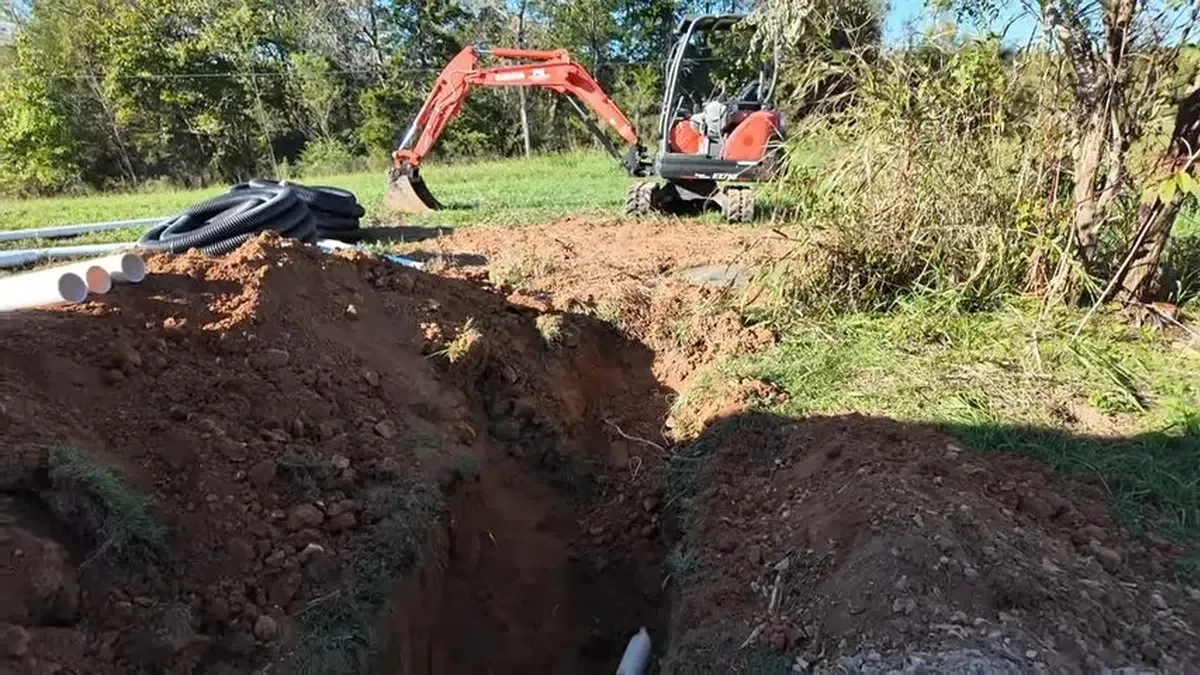
Trenchless methods leave the yard mostly intact but are not right for every line, such as one with a collapsed section or a belly that holds water. Ask why the plumber recommends a method and what would change the recommendation.
Georgia 811 before any digging
State law requires a call to Georgia 811 before mechanized digging, and the program's own pages give two different lead times, 48 hours in one place and three business days in another. Plan for the longer one. The plumber normally files the ticket; ask them to confirm it.
Do not dig near the line yourself. Buried gas, electric and water lines run through the same yard.
Inside the marked zone, expect hand tools rather than a machine, and a shored trench if the line sits deep. Ask for the ticket number and keep it with the job papers, since it records when the request was made. Lines the utilities cannot mark, such as old private lines, still need the plumber's own care.
Sewer smell, cleanouts and same-day service
A smell near a drain is not always a failed sewer line. A dry trap, a vent problem or a partial clog can do the same. A sewer smell outside near the cleanout points to the line; one inside points first to a trap or vent. A camera check settles which.
A cleanout is a capped pipe, usually near the house or at the property line, that gives access to the sewer line. Know where yours is. If a cap is missing or the cleanout is buried, tell the plumber.
Emergencies come first. If sewage is rising now, the dispatcher takes the call 24/7 and confirms what is possible for your address. No arrival time is promised before that call.
Questions about sewer line repair in Atlanta
What are the signs of a main sewer line problem?
Several drains backing up at once, a toilet that gurgles when another fixture drains, sewage in a floor drain or a tub, and a sewer smell near a cleanout.
Who owns the sewer lateral, the homeowner or the City?
No City or county source that names the owner was found for this page. Ask the utility that serves your address where the owner's responsibility ends, and get the answer in writing.
Can a sewer line be repaired without digging up the yard?
Sometimes. Trenchless versus open-trench repair is decided by the camera: lining and pipe bursting avoid a full trench for many lines. A camera inspection decides whether the pipe suits them.
Is a sewer camera inspection worth it before buying a house?
It shows the condition of the lateral, which a visual inspection cannot. Ask for the recording and keep it with the sale papers.
Do I need to call 811 for a sewer repair?
Yes, before any machine digging. Your plumber normally files the request, but ask to see the ticket number.
Related backup and sewer pages
Drain clogs
Branch clogs and slow drains are covered on the page for drain cleaning and clogs.
Cleanup
After a backup, extraction and drying handles the affected rooms.
Water lines
The supply side is explained on the water line repair page.
Drains backing up in Atlanta? Call the dispatch line, 24/7.
CALL (770) 588-0011