
Atlanta, GA · Water softener and filtration
Water Filtration System Options in Atlanta, GA: Softeners, Reverse Osmosis and Whole-House Filters
Spots on glasses, scale on a shower head, a chlorine taste or a heater that scales up quickly can point to a water quality problem. Before choosing a system, find out what is actually in the water. Our dispatch line forwards the call to a plumber who works your side of Atlanta, and this page lays out how to choose between a softener, a filter and reverse osmosis.
Say what you notice in the water and what you want to fix. The dispatcher sends the call to a plumber who serves Atlanta.
Call now- Your ZIP code and who sends your water bill.
- What you notice: spots, scale, taste, smell, color.
- Whether you are on city water or a well.
Do you need a softener, a scale reducer or only a filter? Test the water first
The right system depends on what the water contains. Hardness, which is dissolved calcium and magnesium, leaves scale. Chlorine and chloramine affect taste and smell. Sediment and iron stain fixtures. A system that fixes one does little for another.
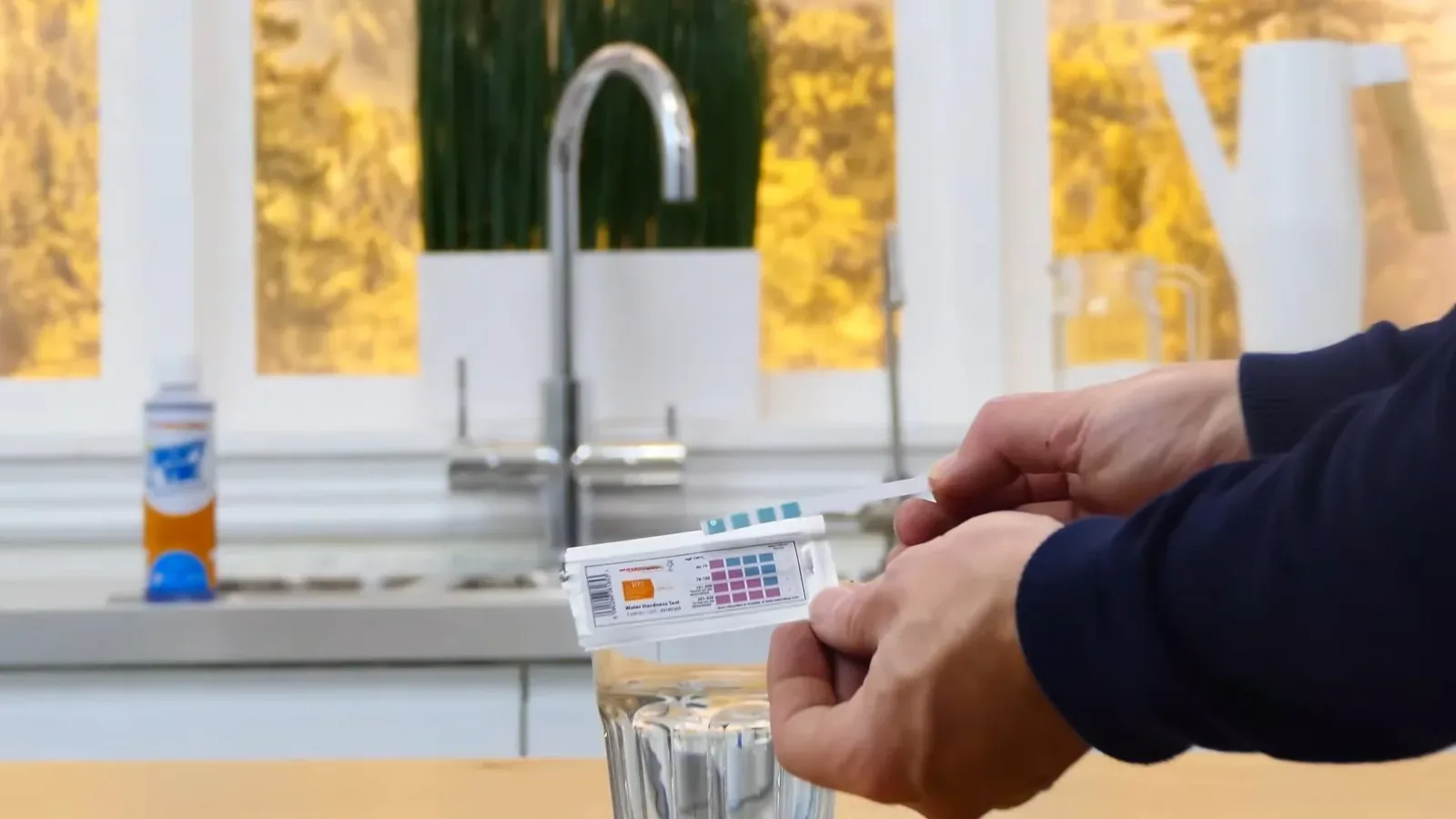
Hardness varies from one part of the Atlanta area to another, and no single figure applies to every address. Test your own water: a test kit, a lab sample or a plumber's meter tells you the number for your tap. Ask the plumber what the result means for the equipment you are considering.
| What you notice | Likely cause | What addresses it |
|---|---|---|
| White crust on fixtures, spotted dishes, scale in the heater | Hardness | Softener, or a scale reducer |
| Chlorine taste or smell | Disinfectant in the supply | Carbon filter at the tap or whole house |
| Brown or orange stains | Iron or rust from pipes | Sediment or iron filter; check the pipe |
| Cloudy water or sand | Sediment | Sediment filter |
| Bad taste in drinking water only | Dissolved substances | Reverse osmosis or carbon at the sink |
Water softener install: where it goes and what it needs
A softener sits on the main water line, usually near the water heater, so every fixture gets softened water. It needs a drain for the backwash, an outlet for the controller, and floor space for the resin tank and the salt tank.
- Bypass valves so the house keeps water while the unit is serviced.
- A drain with an air gap for the regeneration water.
- A cold line to outdoor spigots kept on unsoftened water, which many installers set up.
- Sizing to the household's hardness and daily use.
- A place for salt that you can reach for refills.
Plan the location early. The unit needs a drain, a power outlet and a cold water line within reach of the main, and some houses have the main in a crawl space or an unfinished area that is poor for a salt tank. A plumber can often reroute a short section of pipe to put the softener where it works best.
Salt, brine and regeneration: how a softener works
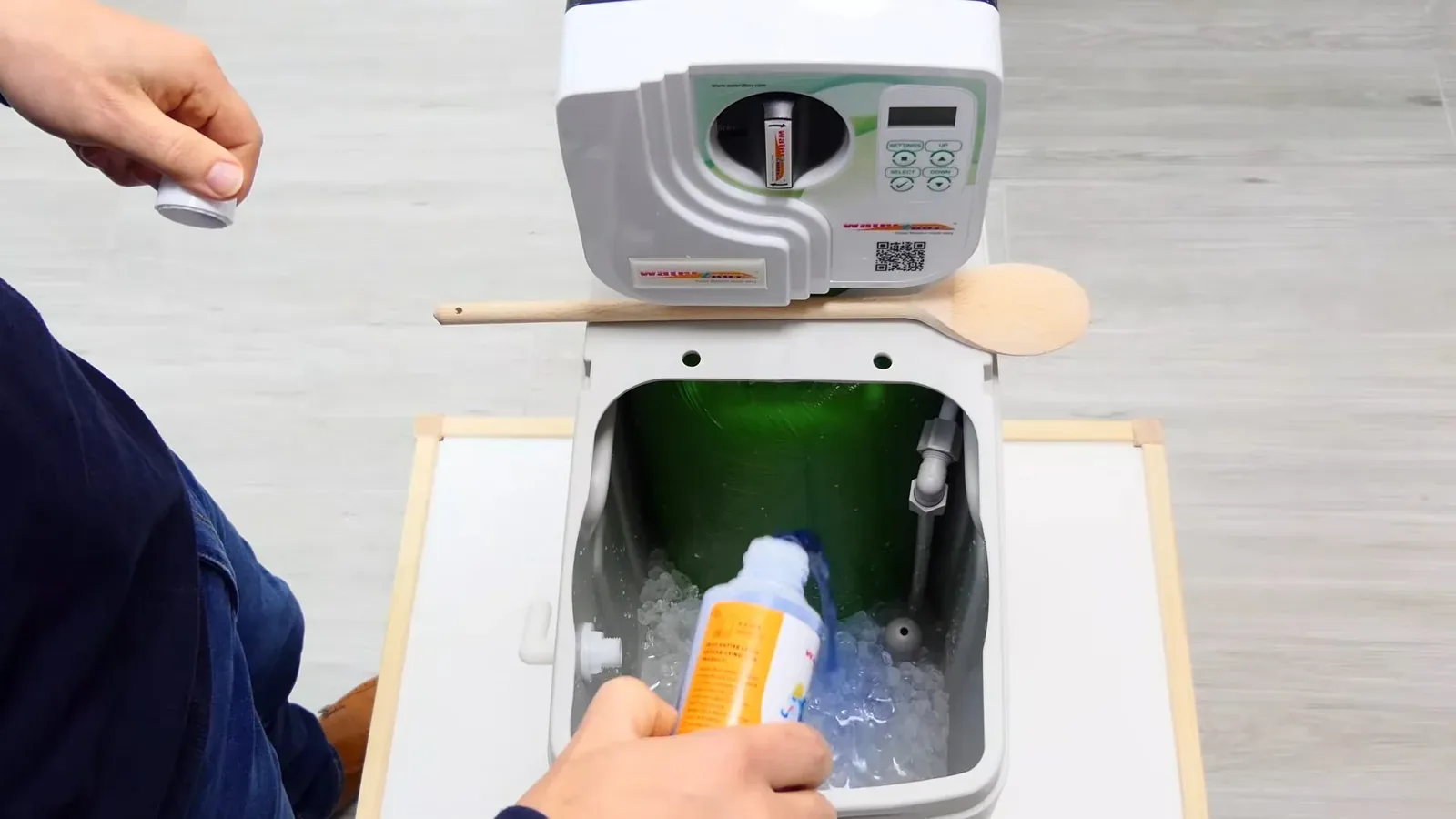
A softener holds resin beads that trap calcium and magnesium as water passes through. When the beads are full, the unit regenerates: it flushes brine from the salt tank through the resin, then rinses the minerals down the drain.
Salt has to be added to the brine tank every few weeks, and the controller is set to the water hardness. A unit set too low leaves hard water; set too high it wastes salt and water.
Water softener repair and service covers stuck valves, brine tank problems, resin that needs replacing and controller faults. A softener that stops softening, a salt bridge in the brine tank or water that tastes salty are usual service calls.
Salt comes in several types, such as pellets, block and crystals, and the manufacturer's manual says which one the unit takes. Using the wrong type can foul the brine tank. A salt bridge, which is a hard crust that forms over the water in the tank, stops brine from forming and is a common reason a softener stops softening.
Reverse osmosis at the sink
A reverse osmosis unit under the sink pushes water through a membrane and removes most dissolved solids, sending the filtered water to a separate faucet. It is for drinking and cooking water, not the whole house.
Ask what the system removes, how often filters and the membrane change, and how much wastewater goes down the drain. A reverse osmosis unit needs a drain connection, a cold line and room under the sink.
Reverse osmosis units produce wastewater as they filter, and many send several parts of drain water for every part of drinking water. Newer units are more efficient. Ask the installer what the ratio is for the unit being recommended and where the drain connection will go, since a poor connection can leak into the cabinet.
Under-sink and sediment filters
A carbon filter under the sink improves taste and smell. A sediment filter, whole-house or point-of-use, catches sand and rust particles before they reach fixtures and appliances.
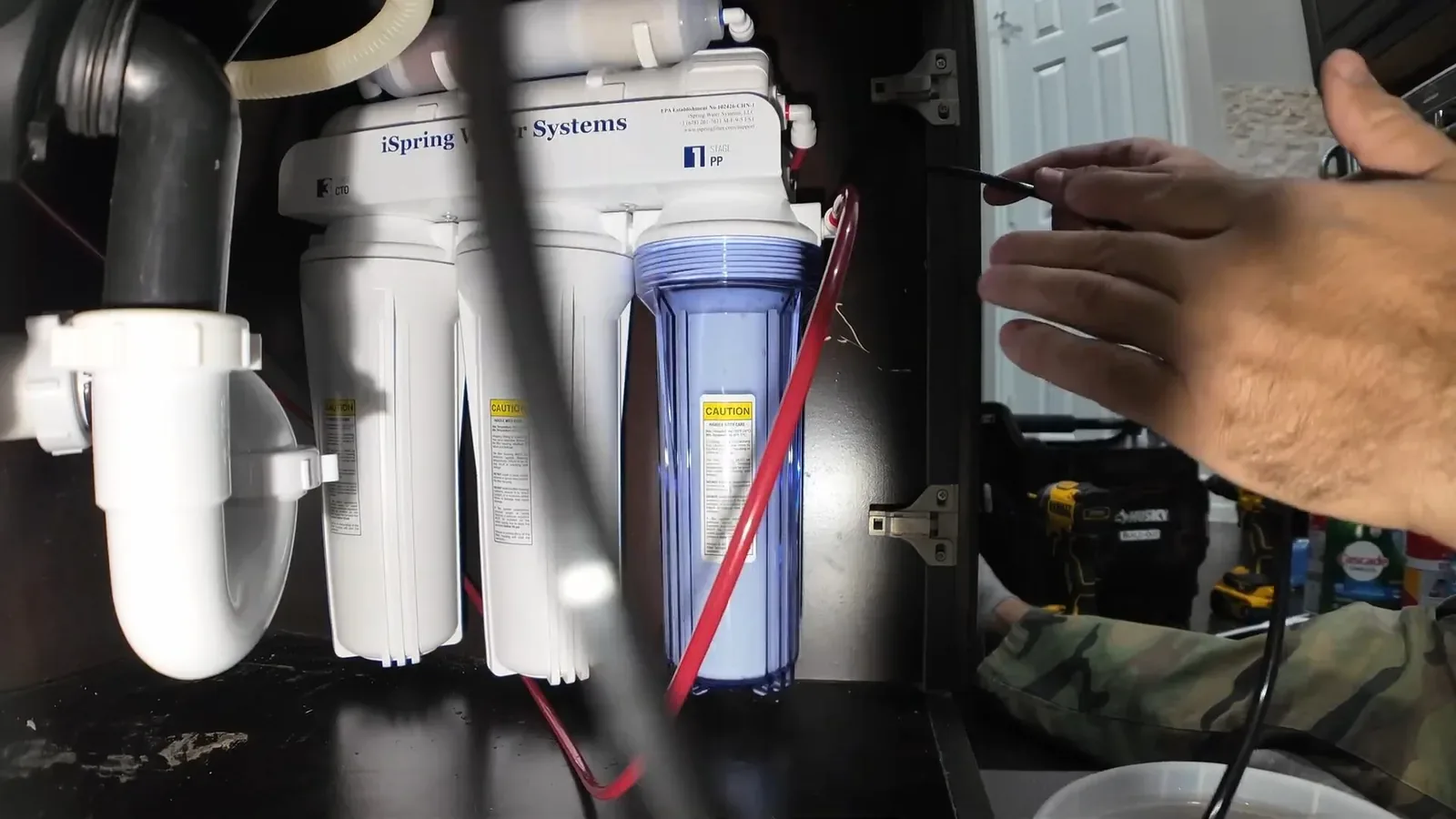
Filters need changing on a schedule. A filter left too long stops working and can restrict flow or add taste of its own. Mark the change date on the housing and keep the cartridge model on file.
Whole-house sediment filters sit on the main line before the water heater, and their housings need a shutoff or bypass so cartridges can be changed without shutting the whole house. Ask which cartridge sizes the housing takes, and keep a spare on hand, since a clogged sediment filter lowers pressure at every tap.
Pitcher filters and faucet-mounted units are the low-effort option, and an under-sink unit gives more capacity and a dedicated tap. Ask the plumber how the housing connects, whether it has its own shutoff and where the drain or overflow goes if a seal fails.
Whole-house filtration and treatment
A whole-house system treats all the water that enters the house. Combinations are common: a sediment filter first, a carbon filter next and a softener last, each sized to the flow of the house.
Ask the plumber how the system affects pressure, where each part will sit and what has to be serviced and when. A whole-house reverse osmosis system is a large installation that most households do not need; the question to ask is what the test results say you are trying to fix.
Water treatment equipment adds points of failure to the main line, so ask where each part sits, how it can be isolated and how you will know when it needs service. A well-planned system has unions or bypass valves around each tank, a labeled shutoff and a note on the wall with the service dates.
Maintenance: what the owner does and what the plumber does
Owners handle salt refills, filter changes on schedule, and simple checks such as listening for the unit regenerating. A plumber handles valve and controller faults, tank leaks, resin replacement and changes to the setup.
Systems that scale reducers or conditioners claim to handle hardness without salt work differently from softeners. Ask the installer how the product works, what it does and does not remove, and what the test numbers should look like afterward.
Water treatment also helps appliances. Ask how it might affect the water heater and whether a tankless unit needs a descaling plan.
Safety: Never connect treatment equipment to the supply without a bypass, and shut off the water before any service.
Keep a simple log: salt added, filter changed and test results. A new test of the water every year or two shows whether the system is still doing its job, and gives the plumber something to compare. If the numbers drift, the log shows whether the cause was a missed filter change or a failing part.
Questions about water filtration and softeners in Atlanta
Do I need a water softener in Atlanta?
It depends on your hardness, which varies by address. Test the water and decide from the result.
What is the difference between a softener and a filter?
A softener swaps hardness minerals for sodium or potassium. A filter removes particles, chlorine or other substances. They solve different problems.
How often does a softener need salt?
Every few weeks, depending on the size of the unit and the household's use.
Is reverse osmosis worth it?
It suits drinking and cooking water. It is not a whole-house solution.
Who maintains a softener?
The owner refills salt and changes filters. A plumber services valves, tanks and controllers.
Related heater and scale pages
Tank heaters
Scale and sediment show up in water heater repair.
Tankless units
A descaling flush for tankless heaters belongs in the maintenance plan.
New heaters
See installing a replacement water heater for sizing and fuel.
Water quality question in Atlanta? Call the dispatch line to reach a plumber serving your area.
CALL (770) 588-0011