
Atlanta, GA · Tankless water heaters
Tankless Water Heater Service in Atlanta, GA: Gas or Electric, Venting and Descaling
A tankless heater heats water as it flows, so there is no tank to run out. That convenience comes with its own list of questions: whether the gas line and vent can support it, what happens when scale builds up inside, and whether a failing unit is worth repairing. Our dispatch line sends your call to a plumber working in Atlanta, and this page sets out what to ask.
Say whether the unit is gas or electric, any error code on its display, and what you see. The dispatcher sends your call to a plumber who serves Atlanta.
Call now- Your ZIP code and the unit's brand, if you know it.
- Any error code on the display.
- Whether the water runs lukewarm, goes cold in bursts, or does not heat at all.
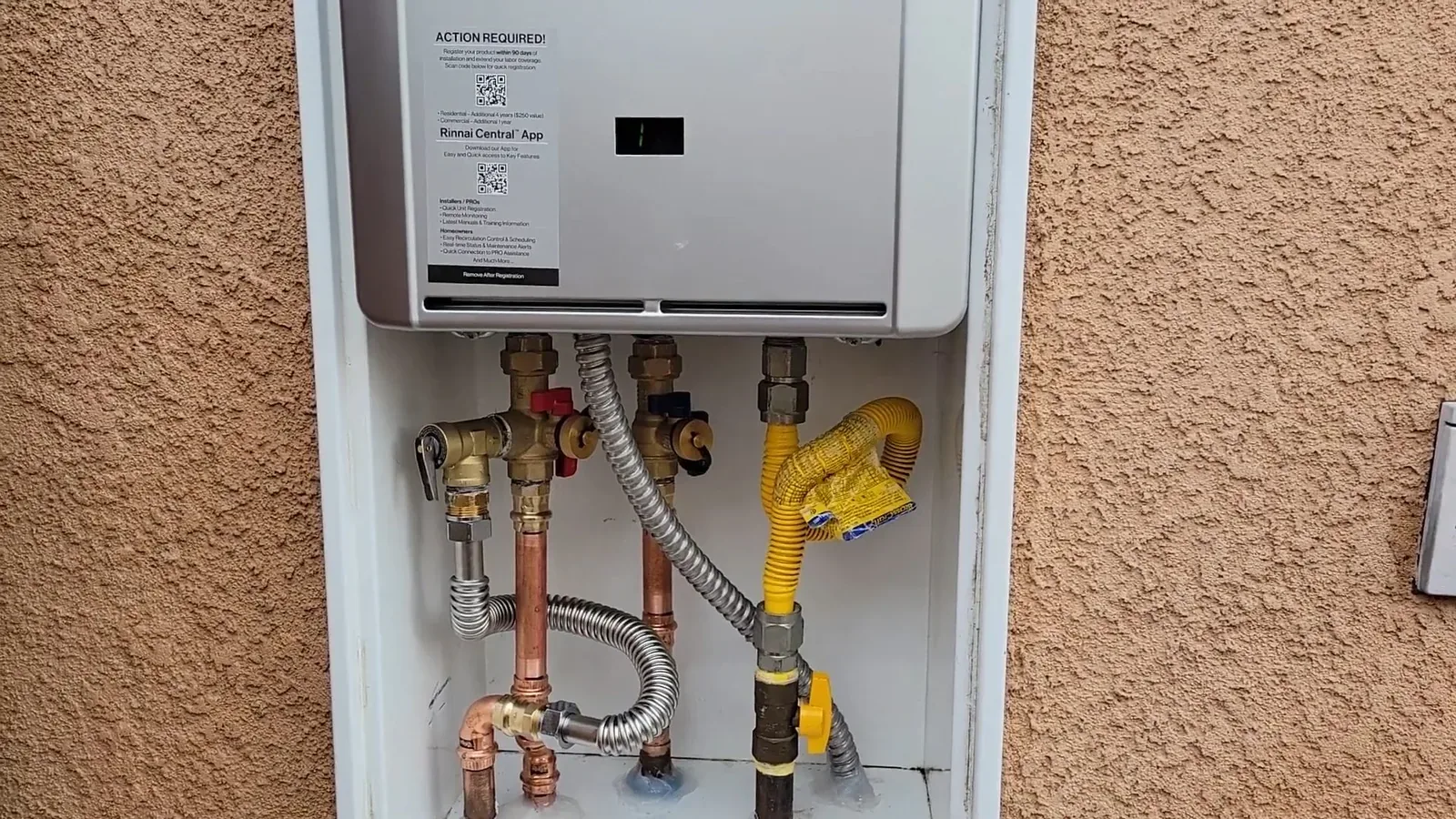
Tankless water heater repair: error codes, cold bursts and no heat
Tankless units have sensors and a controller, so most failures announce themselves with an error code. The code points to a category: ignition, flame, flow, temperature or venting. Write the code down before you call.
| What happens | Likely cause | What the plumber checks |
|---|---|---|
| Hot water turns cold for a few seconds | Low flow, a clogged inlet filter or scale | Inlet screen, flow rate, heat exchanger |
| Error code and no heat | Ignition failure, flame sensor, or venting problem | Gas supply, igniter, flame rod, vent |
| Water is lukewarm | Scale on the heat exchanger or an undersized unit | Exchanger condition, temperature setting |
| Unit shuts down while running | Overheat or blocked vent | Vent path, condensate drain |
| Water leaks from the unit | A fitting, a condensate line or the heat exchanger | Source of the water |
Basic troubleshooting clears many codes, such as cleaning a filter or resetting the unit. If the same code returns, that points to a part or a supply problem.
Gas or electric: whether the supply and venting can support a tankless unit
A tankless heater delivers a lot of heat quickly, so the supply has to keep up. A gas unit often needs a larger gas line than a tank heater of the same house, and it needs a vent rated for the unit. An electric unit needs a heavy circuit, sometimes more than the panel has to spare.
- Gas: pipe size and length from the meter, the unit's gas input, and the vent type.
- Electric: breaker size, wire gauge and available panel capacity.
- Water: inlet and outlet size, and whether a recirculation loop is wanted.
- Space: wall space, clearances and where the vent can exit.
Gas odor: Step outside, then report it to 911 or the gas utility from a safe distance. Do not hunt for the source.
New and resized gas runs are covered on the sizing a larger gas line.
Flushing and descaling: what maintenance a tankless unit needs
Minerals in the water can coat the heat exchanger of a tankless heater, which reduces heat transfer and flow. A descaling flush runs a mild acid solution through the unit to dissolve the scale, then rinses it.
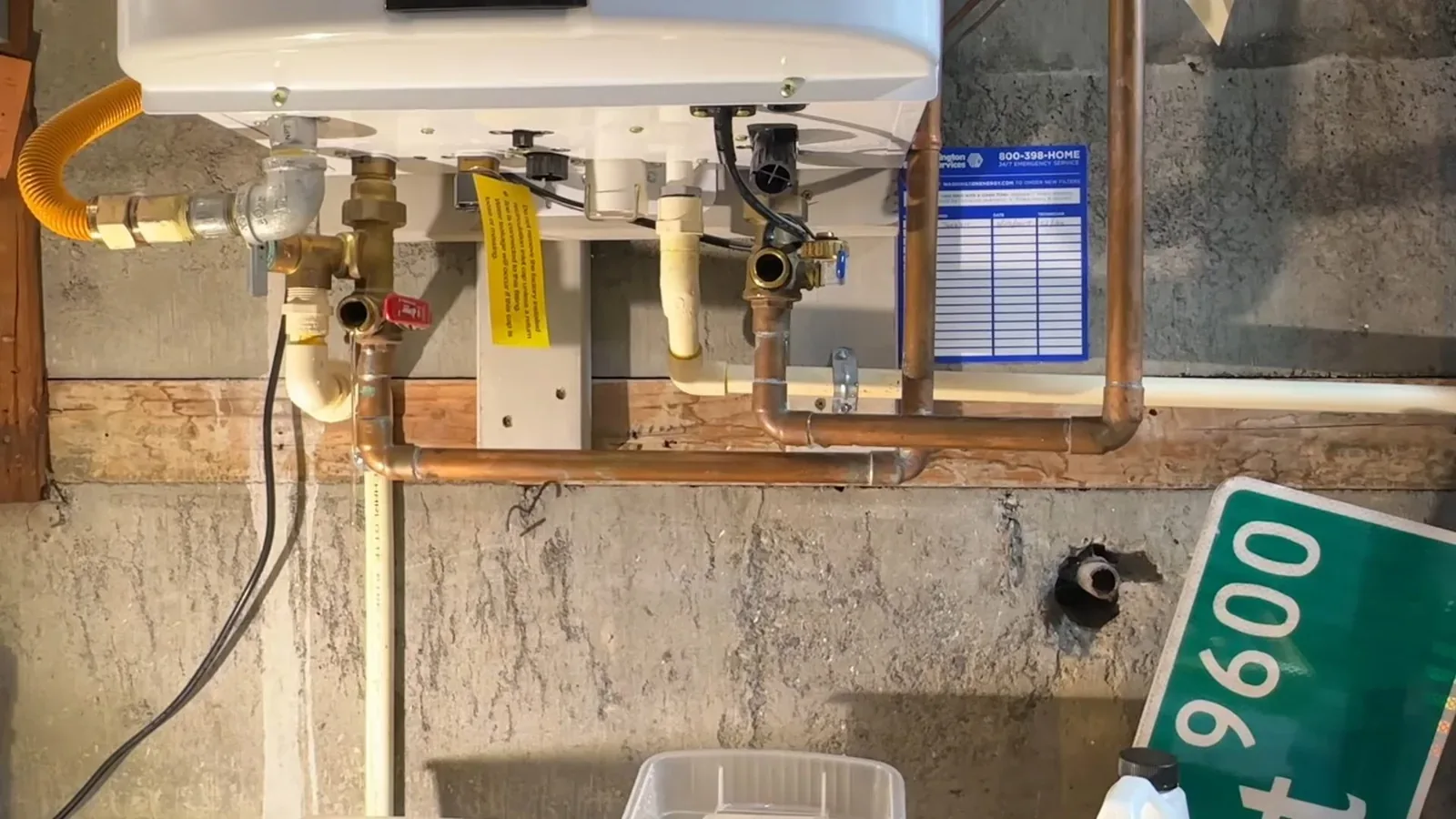
Hardness differs from one part of the area to another, so no single figure fits every house. If you are unsure, test the water and ask the plumber how often a flush makes sense for your address. The treatments that reduce scale covers treatment that lowers scale.
Tankless units also have an inlet filter and a condensate drain that need cleaning, and a gas unit should have its vent checked. Service valves, which let the plumber flush without removing the heater, make future maintenance simpler.
Tankless installation: what a conversion involves
Replacing a tank heater with a tankless unit is a conversion, not a swap. It usually touches the gas line, the venting, the electrical supply and the plumbing connections at the same time.
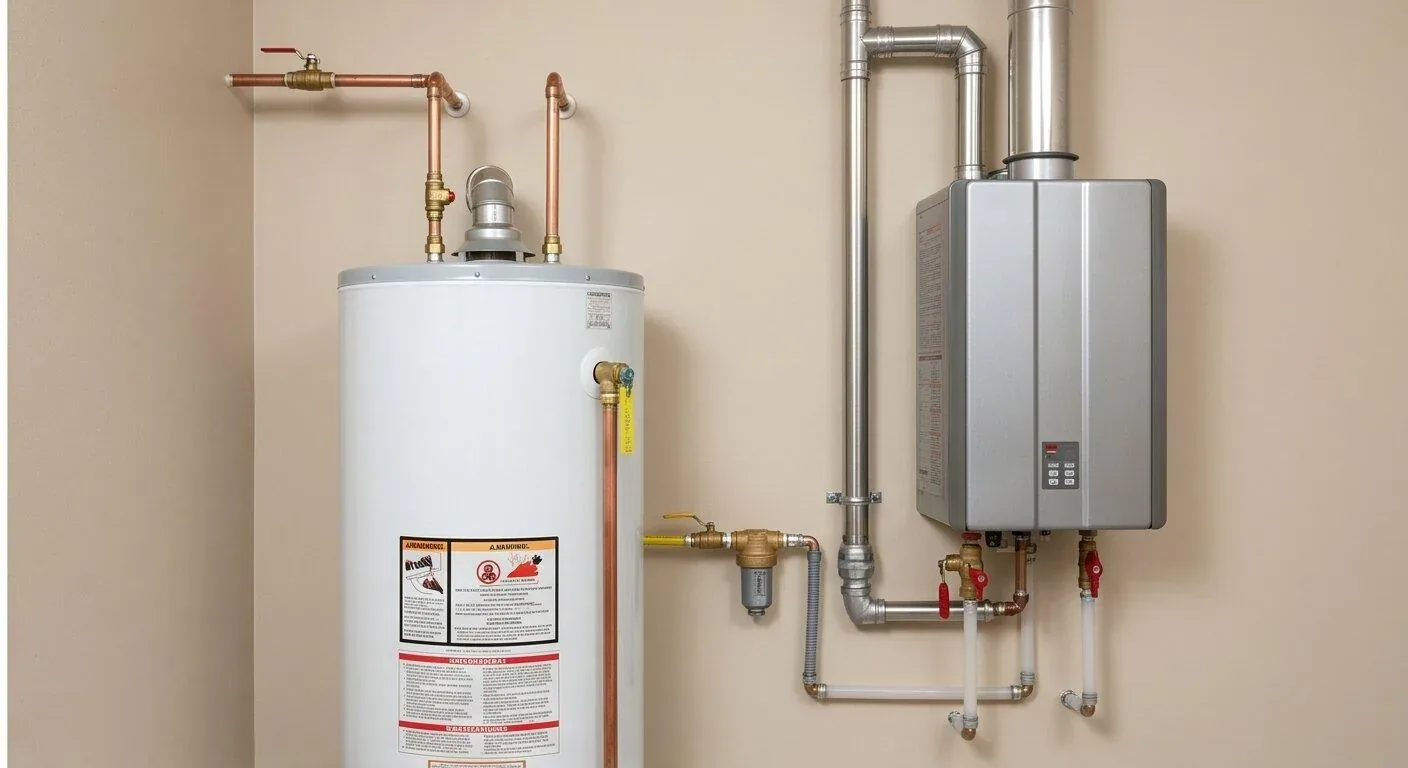
- Assess the house: demand, existing gas or electric capacity, and wall location.
- Choose a unit and a vent method that fit the space.
- Remove the tank heater and its flue, and cap what is no longer used.
- Install the unit, service valves, venting and condensate drain.
- Connect and test gas or electric, then purge and set the temperature.
Ask the plumber for a written scope that lists each of those items. A conversion that reuses an old flue or an undersized gas line is a common source of trouble later. The sizing and general replacement questions covers sizing and general questions.
Repair or replace a tankless unit
A tankless unit with a failed part and a sound heat exchanger is usually worth repairing. A cracked or badly scaled heat exchanger is a larger repair, and on an older unit it may tip the decision toward replacement.
Ask the plumber what failed, what part is needed and whether the rest of the unit looks sound. A written answer lets you compare the repair with the price of a replacement.
Brands and models differ in how long they run and how easily parts can be found. Ask whether parts for your unit are available before agreeing to a repair on an older model.
Warranty and service history matter more on tankless units, because many of them are installed with a specific maintenance expectation. If the unit has never been flushed and shows scale problems, ask whether a descaling flush could restore it before a bigger repair or a replacement is considered.
Tankless versus tank: when each fits
A storage tank is the simpler option and the lower upfront effort. It stores hot water and can run out when many fixtures run at once. A tankless unit gives continuous hot water and saves space, but it needs more capacity from the gas line or panel and a maintenance habit.
Households with high simultaneous demand or limited space lean toward tankless. A modest household with a closet-sized heater and a limited gas supply can be better served by a tank. A plumber who has seen the house can say which applies.
Backup also deserves a question. A tankless unit stops when power or gas stops, and many need electricity even when gas-fired. If hot water during an outage matters to your household, say so, since a storage tank on gas can keep some hot water in reserve.
Questions about tankless water heaters in Atlanta
Is a tankless water heater worth it?
It depends on the house. A household with heavy simultaneous demand or little space can benefit. A house where the gas line or panel would need a big upgrade may be better served by a tank.
Why does my tankless heater run cold for a few seconds?
Low flow, a clogged inlet filter or scale on the heat exchanger are common reasons. Flushing the unit and cleaning the filter often helps.
Do tankless heaters need flushing?
Minerals build up on the heat exchanger, so a descaling flush belongs to ordinary maintenance. How often depends on your water.
Can I convert from a tank to a tankless heater?
Often yes, though it usually means changes to gas, venting, electric and plumbing. Ask the plumber for a written scope.
What does a tankless error code mean?
Codes group into ignition, flame, flow, temperature and venting problems. Write the code down and give it to the dispatcher.
Related water heater pages
Tank heaters
Leaks and failed parts on a tank are covered under tank repairs.
Replacing a heater
Sizing and type are covered under installing a replacement heater.
Scale
See water softener options for treatment that lowers scale.
Tankless heater down or ready to convert? Call the dispatch line to reach a plumber serving Atlanta.
CALL (770) 588-0011