
Atlanta, GA · Water heater repair
Water Heater Repair in Atlanta, GA: Leaks, Lukewarm Water and When to Replace Instead
Cold showers, a puddle at the base of the tank or a rumbling noise from the garage all point to a water heater that needs attention. The first job is telling a repairable part from a failed tank. Our dispatch line finds a plumber for your part of Atlanta, and the plumber's findings decide between repair and replacement.
Say whether the heater is gas or electric, where it sits and what you see. The dispatcher passes it to a plumber who serves Atlanta.
Call now- Your ZIP code and the heater's location.
- Gas or electric, and roughly how old it is.
- Whether water is on the floor and if the supply is shut off.
Leaking, no hot water or lukewarm: where the problem starts
A water heater fails in a handful of ways, and each has a recognizable pattern. Describing the pattern on the phone helps the plumber bring the right parts.
| What you notice | Likely cause | What the plumber checks |
|---|---|---|
| No hot water at all | Gas: pilot, igniter or thermocouple. Electric: tripped breaker, thermostat or heating element | Power or gas supply, then the failed part |
| Lukewarm water, runs out quickly | A burned-out lower element, sediment, or a dip tube problem | Element resistance, sediment buildup, flow at the tank |
| Water at the base of the tank | A loose fitting, a leaking valve, or a corroded tank | Where exactly the water first appears |
| Popping or rumbling noises | Sediment hardened at the bottom of the tank | Tank interior condition, flush results |
| Water too hot, or steam from the discharge pipe | A failed thermostat or a relief valve discharging | Thermostat setting, temperature and pressure relief valve |
| Rusty or discolored hot water | Corroding tank interior or an exhausted anode rod | Anode rod condition, tank age |
If water is spreading across the floor, close the heater's cold inlet valve and, for an electric unit, switch off its breaker. For a gas unit, set the gas control to off only if you can reach it without standing in water.
Gas or electric: what changes in the repair
The fuel decides which parts can fail. A gas water heater adds a burner, pilot or igniter, a thermocouple and a flue. An electric heater has two heating elements, two thermostats and a high-limit switch.
On gas heaters, the common repairs are replacing a thermocouple that no longer senses the flame, cleaning or replacing an igniter, and clearing a burner that has soot or debris. A pilot that will not stay lit can also point to a blocked vent or poor air supply. On electric heaters, a failed element or thermostat is the usual culprit, and replacement is a short repair when the tank itself is sound.
A gas odor near the heater is a different matter, handled in the safety section below before any repair. The gas line inspection and repair covers what happens once the utility has cleared the building.
Flushing, sediment and the anode rod: what maintenance actually does
Water leaves minerals and sediment at the bottom of the tank over time. A layer of sediment insulates the water from the burner or element, so the heater works harder and the tank can overheat at the bottom. A flush drains and rinses that layer out.
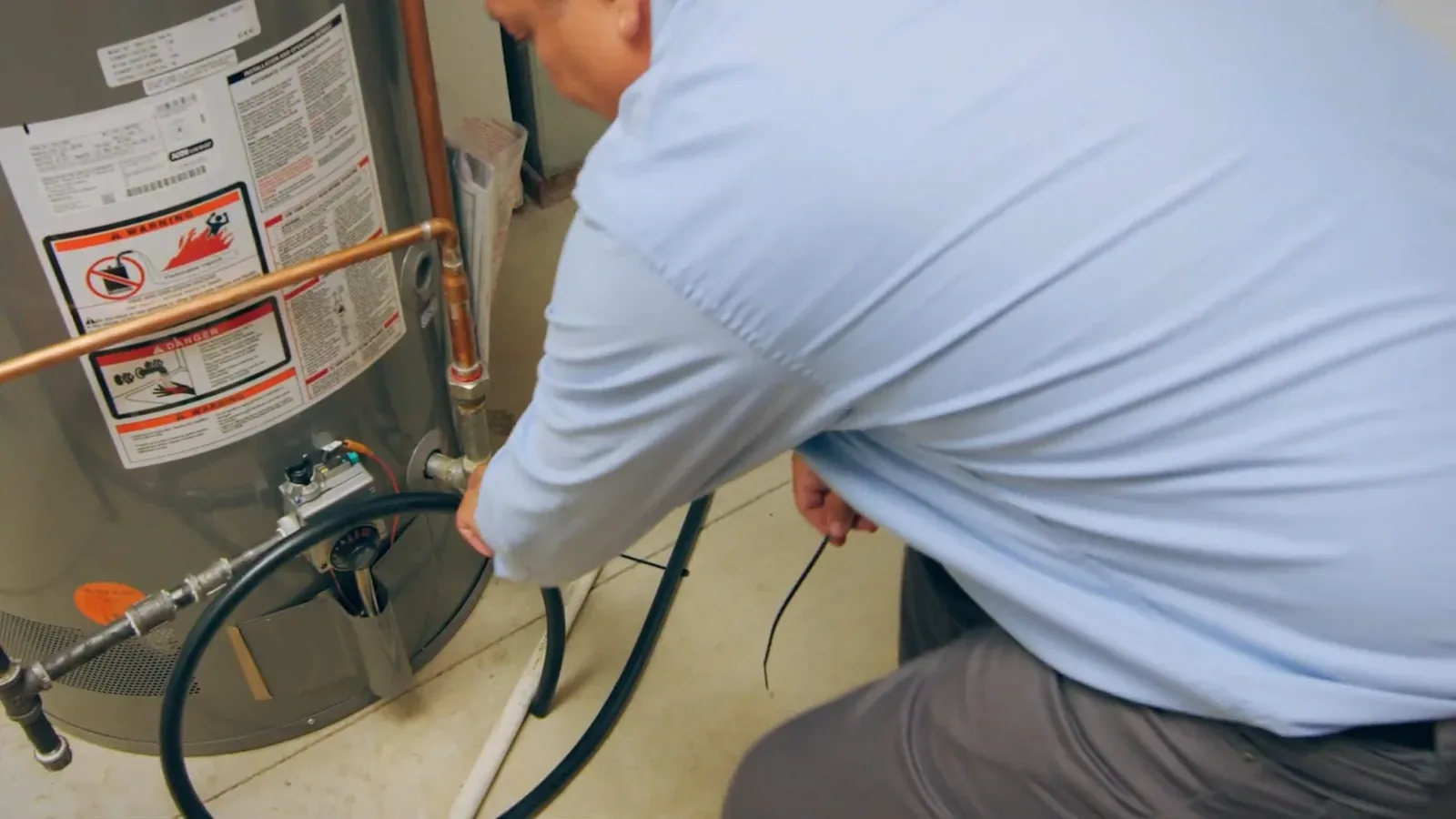
The anode rod is a metal rod inside the tank that corrodes first so the tank does not. When the rod is used up, the tank wall starts corroding. A plumber can check and replace the rod on many tanks, which is one reason annual attention matters more as the heater ages.
Hardness is not the same everywhere around Atlanta, so how much scale a heater collects depends on where the house is. If scale is a concern, test the water and ask the plumber what the heater's inside looks like after a flush. The treating hard water explains treatment options.
Not every flush is a good idea. A very old tank with heavy sediment can start leaking after it is disturbed. Ask the plumber to look at the tank's age and condition before a flush.
A leaking tank: fitting, valve or the tank itself
Water on the floor does not always mean the tank is done. Fittings on the top, the drain valve on the side and the relief valve can all leak, and each can be repaired or replaced.
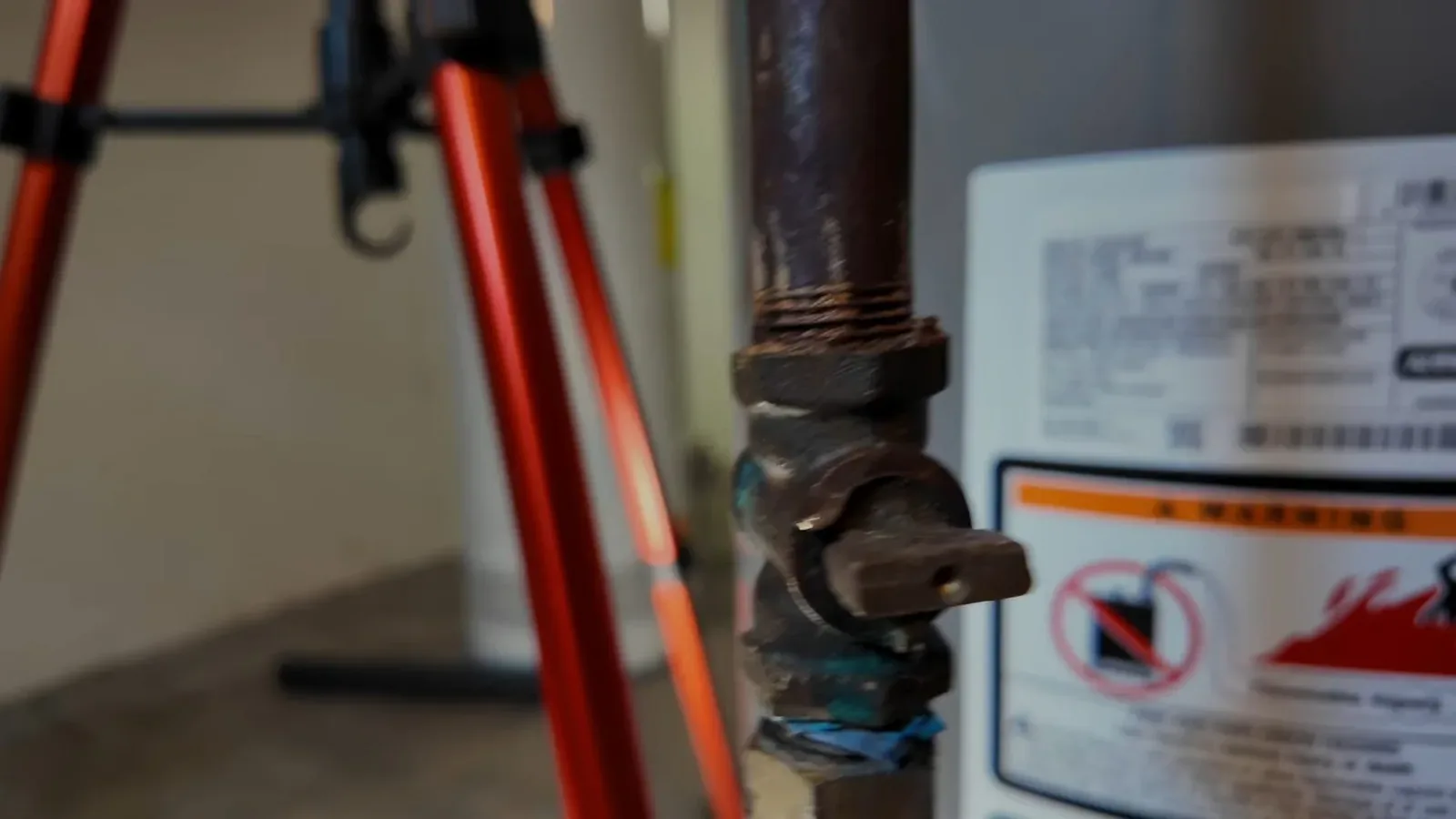
Water that comes from the bottom of the tank jacket, or a tank that is sweating on the outside, is a different case. A crack or a corrosion hole in the tank cannot be repaired, and replacement is the only answer.
- Wipe the tank dry and watch where water first returns.
- Check the supply and outlet connections at the top for drips.
- Look at the relief valve and the pipe below it for water.
- Check the drain valve near the bottom.
- Note whether the leak slows when the supply is closed.
Repair or replace at this age: how the choice is made
A tank water heater typically lasts a limited number of years, and the point at which repair stops making sense depends on its age, how many repairs it has had and what is wrong now.
| Situation | Repair fits | Replacement fits |
|---|---|---|
| Failed element, thermostat, igniter or thermocouple | Yes, if the tank is sound | If the heater is old and has had other repairs |
| Leaking fitting or valve | Yes | If the tank is also corroded |
| Leak from the tank itself | No | Yes |
| Repeated repairs in a short span | Rarely | Often |
| Heavy sediment and noise on an older tank | A flush may help | If the tank shows corrosion or leaks after the flush |
Replacement is a bigger step. The replacing the heater covers sizing, fuel and what to ask, and the tankless as the alternative compares the alternative.
Safety: gas smell, relief valve discharge and scalding
Gas odor near the heater: Get everyone outside before doing anything else, then phone 911 or the gas company from the yard or street. Leave the pilot, the switches and the gas valve alone.
A relief valve that discharges water or steam is doing its job: it opens when temperature or pressure gets too high. Repeated discharge means something is wrong, such as a failed thermostat or a closed system with no expansion room. Do not cap the valve or its discharge pipe.
Water set too hot can scald. Many households set the thermostat low enough to reduce scalding risk, especially with children or older adults. A plumber can check the setting and confirm the mixing at the tap.
Treat any water heater problem near a closet, attic or garage with the same care: keep storage and flammables well away from the unit, and keep its vent and air supply unobstructed. If the pilot keeps going out, the vent or air supply is the likely cause, and relighting it repeatedly is not a fix.
What to have ready and what to ask the plumber
- The heater's age, fuel type and tank size, from the label on the tank.
- Whether the problem started suddenly or built up over weeks.
- Any noise, smell or discoloration in the water.
- What the plumber found, in writing, including which parts failed.
- Whether the repair covers only the failed part or includes testing the rest of the heater.
Same-day availability depends on location, time and the plumber's schedule, so the dispatcher checks it while you are on the phone. A heater in a leaking state is worth calling about the same day; a heater that simply runs out of hot water quickly can usually wait for a scheduled visit.
Also note where the shutoff valves are and whether the heater sits above living space. Water from a failed tank in an attic or upper closet can travel through a ceiling, so a small drip there deserves quicker attention than one on a garage slab.
Questions about water heater repair in Atlanta
How long does a tank water heater last?
Tank heaters last a limited number of years, and condition matters more than the calendar. Corrosion, leaks and repeated repairs usually push the choice toward replacement. The plumber's inspection gives the real answer for your heater.
Why is my water heater making noise?
Popping and rumbling usually come from sediment that has hardened at the bottom of the tank. A flush can help on a sound tank. Very old tanks sometimes leak after a flush, so ask the plumber to inspect it first.
Why does my water heater run out of hot water quickly?
On an electric heater a failed lower element is a common reason. On any tank, sediment and demand that has outgrown the tank's size are others. The plumber checks the element and sediment before suggesting a larger unit.
Who fixes hot water heaters?
A licensed plumber can repair gas and electric tank heaters. Gas work involves the gas supply and flue, so confirm the plumber is qualified for gas appliances.
Is a leaking water heater an emergency?
A leak that spreads across the floor is worth a same-day call after shutting off the water supply and power. A slow drip at a fitting can wait for a scheduled visit if the area is dry.
Related water heater and fixture pages
Replacing the heater
Sizing and fuel are covered on water heater installation and replacement.
Hot water without a tank
Tankless water heaters work differently and have their own maintenance.
Scale and water quality
Treatment choices are explained under softeners and filtration.
No hot water or a leaking heater in Atlanta? Call the dispatch line to reach a plumber serving your area.
CALL (770) 588-0011